The Minnesota Vikings have built one of the league’s most impressive starts at 6-0, sitting atop the NFC with a defense that has been nearly impenetrable. Yet the offense remains a clear area of concern, ranking near the bottom in total yards and points scored.
With Aaron Jones carrying the load at age 31 while managing knee issues and Jordan Mason returning from a thumb injury, the backfield offers solid short-term options but little certainty beyond this season.
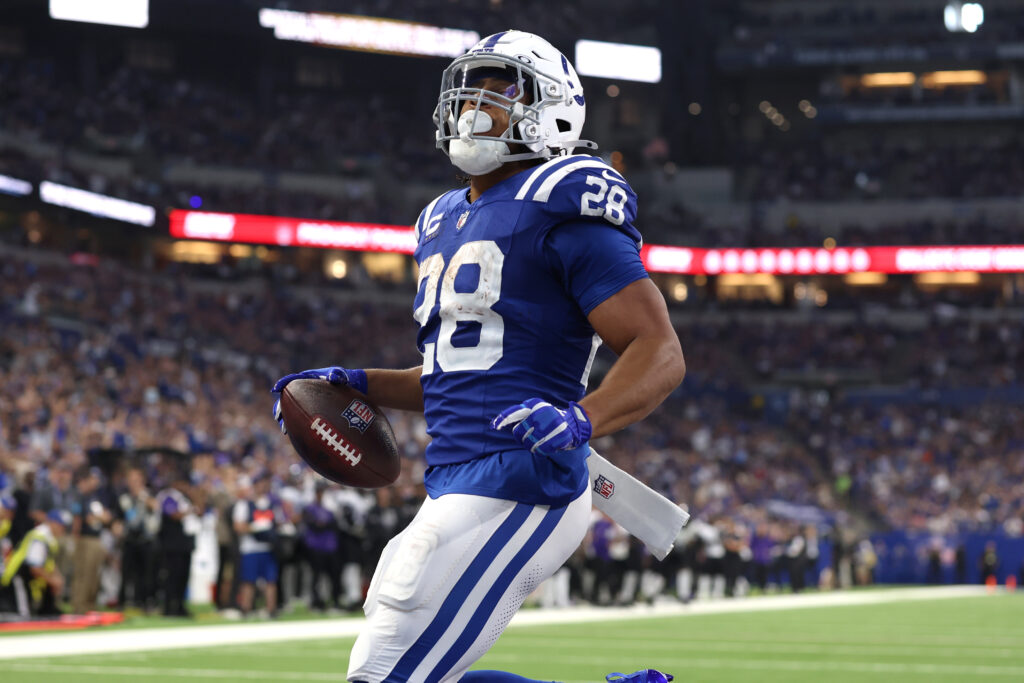
Both veterans are set to hit free agency, which makes the reported interest in Indianapolis Colts star Jonathan Taylor logical from a long-term and immediate standpoint.
Taylor, still in his prime and under contract through 2028 after a recent extension, would immediately upgrade the ground game for a team that has leaned heavily on time of possession and defensive dominance.
A dynamic runner who can create explosive plays would ease the burden on Kyler Murray and give Kevin O’Connell more flexibility in an offense that has often looked limited.
Multiple reports have linked the Vikings to Taylor, and NFL insider Jordan Schultz just noted Minnesota as one of several teams checking in, including the Giants, Broncos, Bengals, and Packers.
That interest makes sense for a contender looking to push all-in before the November 10 trade deadline.
What should give the Vikings pause, however, is the Colts’ reported asking price, as Schultz has indicated that Indianapolis is seeking a return higher than teams are willing to pay.
Compensation for Taylor is expected to be similar to the package the 49ers surrendered for Christian McCaffrey in 2022—a collection of mid-round picks that included a second, third, fourth, and fifth.
Recent reporting further suggests the Colts already turned down an offer centered on a 2027 second-round pick plus another selection, signaling they are not treating this as a pure fire sale despite their 2-5 record and earlier moves involving Quenton Nelson and DeForest Buckner.
For a first-year general manager in Nolan Teasley, that price tag presents a genuine dilemma. The Vikings have draft capital to work with, including an extra third-rounder from a previous deal, but overpaying for a running back—even one as talented as Taylor—carries risk.
The position’s value in the modern NFL is often debated, and committing multiple day-two picks while already contending could leave the roster thinner in future years if injuries or regression hit.
Minnesota’s current backfield is functional enough to win games behind an elite defense, so the calculus is different than it would be for a team desperate for a spark.
The Vikings can afford to be patient and see whether the price comes down as the deadline approaches, or whether Indianapolis ultimately holds firm.
Taylor would be a difference-maker capable of elevating an already strong team, but only if the cost does not compromise the careful balance Teasley appears to be striking between winning now and building sustainably.
At this stage, the reported demands make any deal more concerning than automatic for a franchise that has every reason to protect its future while chasing a title.