
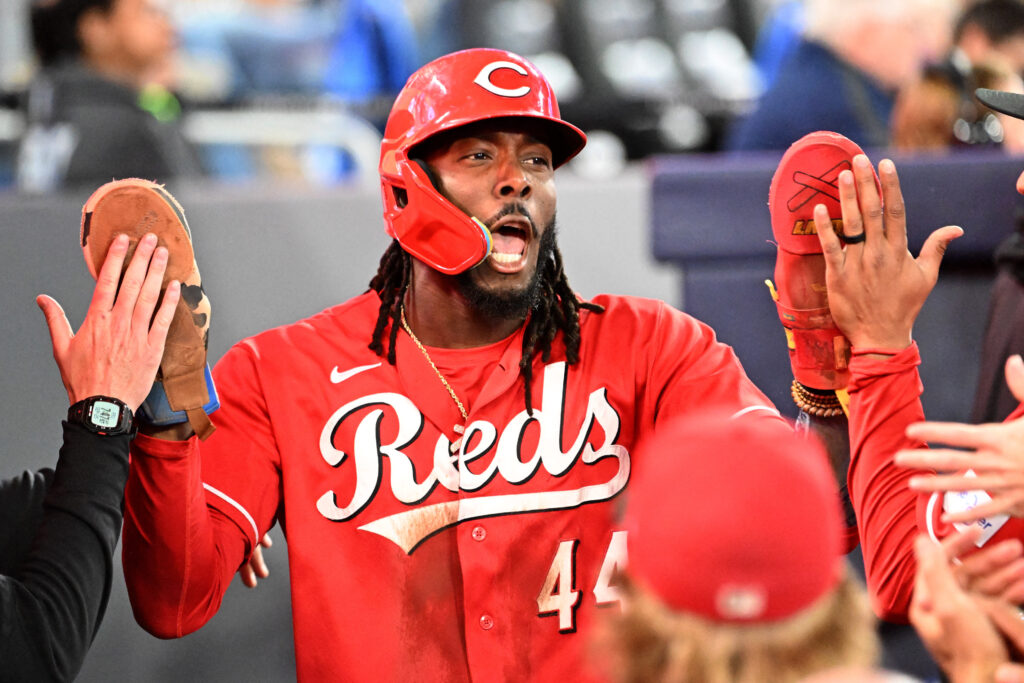
The Cincinnati Reds have heard this before, and the timing makes it no easier to ignore.
Days after Boston’s season ended in a Wild Card sweep, Elly De La Cruz’s name is back in the Red Sox conversation, not as a rumor from July but as an offseason idea the club is being told to revisit.
For the Reds, the interest is less a compliment than a reminder of what they would be asked to give up if they ever decided the shortstop was movable.
In a piece detailing Boston’s potential offseason strategy, Bleacher Report’s Zachary D. Rymer named De La Cruz among Boston’s possible trade targets and argues the Red Sox should try again after a summer pursuit that produced an actual offer and no deal.
Rymer notes that Sean McAdam of MassLive reported the talks before Boston acquired Adley Rutschman at the deadline, and he writes that another run would presumably require Cincinnati to be offered Payton Tolle or Franklin Arias.
He frames the case around De La Cruz’s 2026 season: a 30-30 year, 5.6 rWAR, age 24, and club control through 2029.
That last detail is the one Cincinnati’s front office cannot pretend not to see. Control through 2029 is not a one-year rental window. It is three more seasons of a player who has already shown he can be the face of a lineup, the kind of athlete who changes how an opposing manager writes a game plan before the first pitch.
A 30-30 season at that age is rare enough that most clubs spend a decade hoping a prospect becomes half of it. Trading him now would mean deciding the present core cannot be built around him, not merely that Boston’s package is intriguing.
The failed deadline talks matter for a different reason. An offer that went nowhere suggests the Reds already priced him above what Boston was willing to send, even when a contender was hunting. Tolle is a young arm Boston has treated as part of its future rotation.
Arias is the shortstop prospect Rymer ranks near the top of the Red Sox system, a plus defender who hit his way from Double-A toward the majors. Either name would start a conversation.
Neither automatically replaces a 24-year-old who just put up a star season at the position Arias is supposed to claim.
Boston’s logic is easy to follow from the other side of the deal. The Red Sox want impact, they have prospects, and a switch-hitting shortstop under control into the late 2020s fits a roster still sorting out Trevor Story and the arrival of Arias.
Cincinnati’s logic runs the other direction. Selling De La Cruz would only make sense if the return shortened a rebuild or armed a window the Reds believe is already open.
Until that return exists, the sensible posture is the one they took in July: listen, name the price, and keep the player who just reminded the league why the price is so high.