
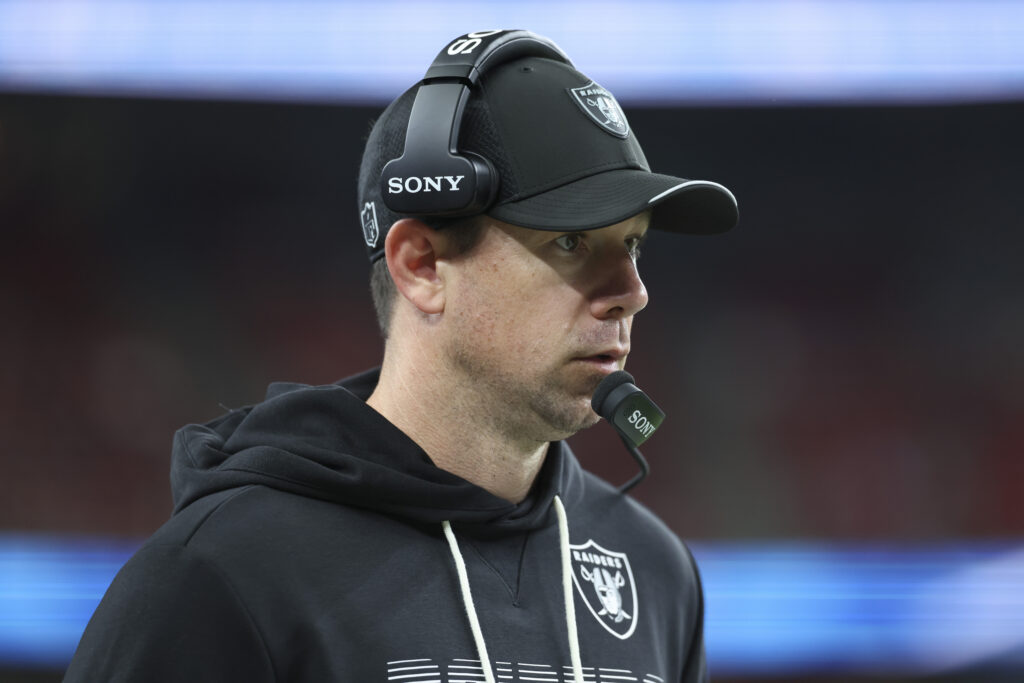
The Las Vegas Raiders quarterback room has grown crowded enough that Aidan O’Connell now looks more useful as a trade chip than as a third option on the depth chart, as ESPN’s Ryan McFadden has noted.
With Kirk Cousins signed to start and first-overall pick Fernando Mendoza waiting in the wings, the 27-year-old Purdue product sits behind two quarterbacks the organization intends to play ahead of him.
That leaves little room for a veteran who has already started 17 NFL games and still believes he can be a starter somewhere.
O’Connell believes he can be a starter in the NFL. That conviction is understandable given his body of work. Across those 17 starts he completed 62 percent of his passes for 3,932 yards, 20 touchdowns and 11 interceptions while posting a 7-10 record.
The numbers are modest rather than spectacular, yet they represent real experience in a league that is chronically short of serviceable backups and emergency starters.
Teams that lose a quarterback to injury in August or September often scramble for exactly this profile: a pocket passer who has already run an offense and won games.
Las Vegas is entering the final year of O’Connell’s rookie contract. If the Raiders keep him and he never plays, they risk watching him walk in free agency next spring with nothing to show for it.
Trading him now, even for modest compensation, would at least convert that unused roster spot into a late-round pick or a pick swap similar to the one that sent Geno Smith to New York years ago.
A seventh-rounder outgoing and a sixth-rounder incoming would not transform the franchise, but it would be better than cutting him and receiving nothing.
The timing of any deal would likely hinge on preseason performance. If O’Connell looks sharp in the exhibition games, clubs that need insurance behind an aging starter or an unproven young quarterback could grow more interested.
The Jets, Cardinals, Patriots and Jaguars have all been mentioned as possible landing spots because each has questions at the position. Interest could also spike if another team’s starter goes down in camp.
Keeping three quarterbacks remains an option if the Raiders want Mendoza to develop slowly and prefer not to throw him into the fire should Cousins struggle or get hurt.
That insurance policy has value. Yet it also means O’Connell would spend another year on the sideline, a scenario that satisfies neither his stated goal of starting nor the team’s need to extract maximum value from a player on an expiring deal.
For now the most logical path is to let O’Connell compete in August, see what the market will pay, and decide whether a late-round selection is worth more than an unused third quarterback.
The Raiders already have their present and future at the position. O’Connell’s best remaining contribution may be helping them acquire a future asset somewhere else.