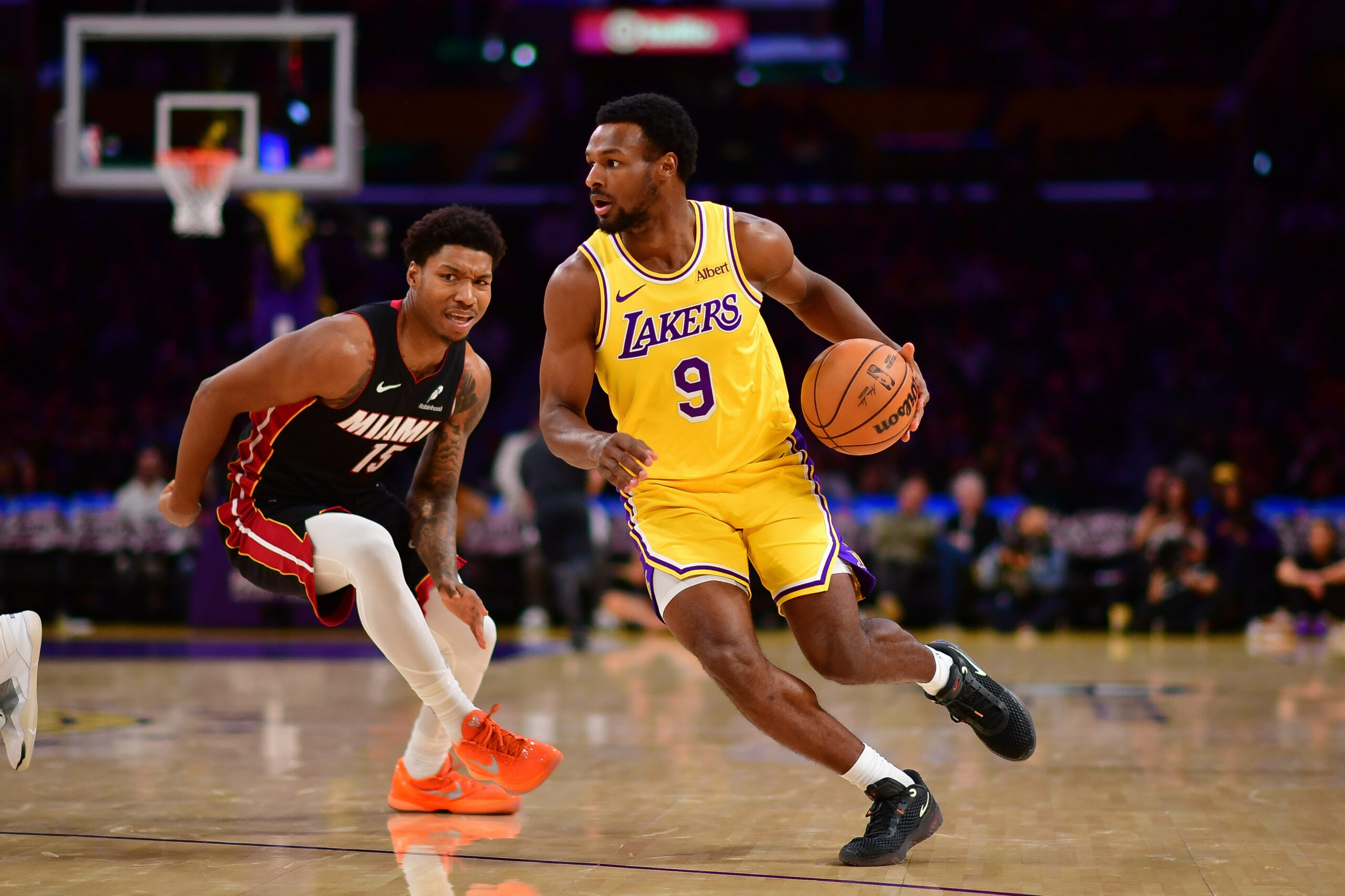
Bronny James finds himself squarely in the middle of the Los Angeles Lakers’ growing trade ambitions as the team eyes upgrades ahead of the February deadline.
General manager Rob Pelinka recently confirmed the front office intends to stay active in the market, aiming to strengthen a roster that has opened the season with real title-contender momentum. That’s bad news for James, who could be moved.
According to NBA insider Marc Stein, that activity centers on finding another center to play behind Walker Kessler, a need the Lakers have been quietly exploring for weeks.
For a franchise with limited movable assets and draft capital, packaging a young player becomes a practical way to close a deal. James, the 55th overall pick in the 2024 draft, has emerged as a logical name in those discussions.
Through limited early-season action he has logged only 19 minutes and averaged 1.1 points, numbers that have left him outside the regular rotation under coach JJ Redick.
While Kevon Looney and Jaden Hardy also sit on the fringes, James’s combination of modest production and residual brand recognition gives him a unique, if modest, trade value that pure salary or picks might not match.
Analysts have noted that smaller-market teams could view the 22-year-old as more than a developmental prospect.
The presence of LeBron James’ son carries marketing weight that a club in Milwaukee or New Orleans, for instance, might leverage for ticket and jersey sales even if his on-court role remains limited.
CBS Sports’ Sam Quinn publicly floated the idea that the Lakers would be better off moving him now to an owner interested in that attention, rather than retaining him while cutting other young talent whose contracts offer clearer salary-matching utility.
The Lakers are not described as actively shopping James, yet the confirmed willingness to make a deal changes the calculus.
With several backup-center options available around the league and competition from other buyers, Los Angeles may need to attach a player or pick to complete a transaction.
James’ contract is modest enough to fit into such a package without disrupting the core, and his lack of consistent minutes reduces the internal cost of including him.
Should no trade materialize, the same roster math that once forced the team to choose between him and Dalton Knecht could lead to a simple waiver if a free-agent addition becomes preferable.
Either path underscores the same reality: the Lakers’ public commitment to improving the roster places James in an uncomfortable position.
His development arc has been slower than hoped, and the team’s strong start has raised the bar for every roster spot.
As deadline talks accelerate, the guard who once represented a long-term investment may instead become the piece that helps the Lakers address a more immediate need.