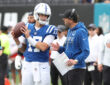
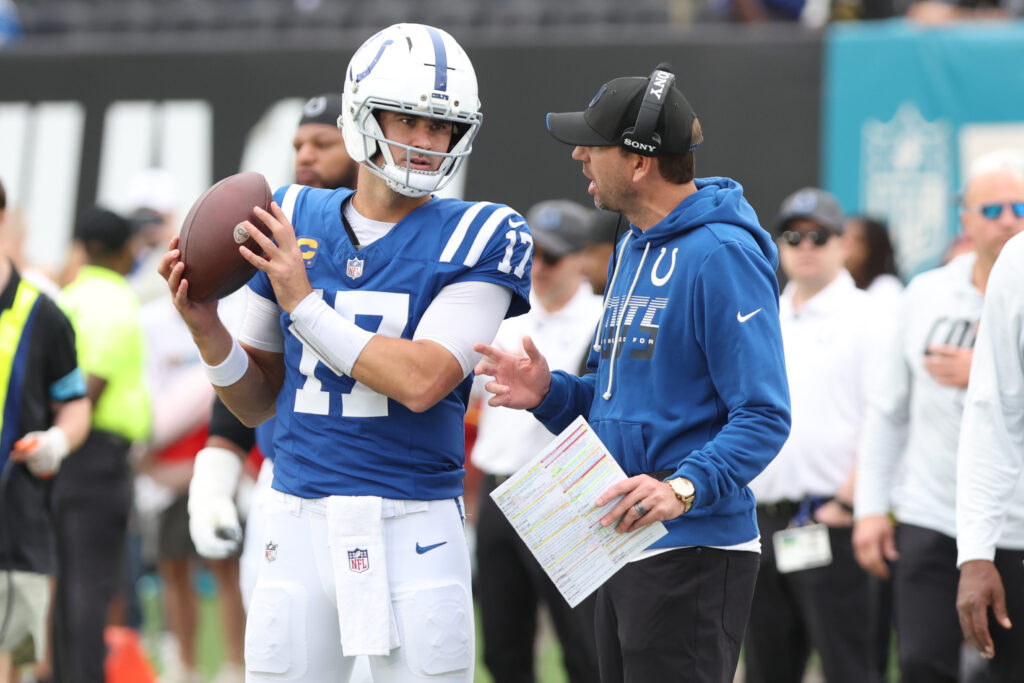
Anthony Richardson entered the NFL with rare physical tools and the weight of a No. 4 overall selection, yet his path with the Indianapolis Colts has been defined by inconsistency, injuries, and an abrupt shift into the role of backup.
Now, with the organization navigating a clear rebuild after parting ways with longtime general manager Chris Ballard, the dual-threat quarterback has reemerged as a plausible trade candidate ahead of the November deadline after he replaced Daniel Jones in the fourth quarter of the Colts’ loss to the Jacksonville Jaguars.
His contract situation makes the timing logical: the Colts declined his fifth-year option, leaving him scheduled to hit free agency after this season, and his current base salary offers limited long-term commitment for a team prioritizing future draft capital.
Billy Heyen of Heavy.com has highlighted how Richardson’s status shifted once Ballard was no longer in place, noting that the former first-round pick represents an obvious candidate to move if Indianapolis wants something tangible before he walks.
With the interim front office already dealing veterans for picks and signaling a youth-focused reset, holding a 24-year-old quarterback who has not started since 2024 becomes harder to justify.
Richardson’s recent misdemeanor marijuana possession charge adds another layer of uncertainty that could further suppress his trade value, yet it has not erased the underlying athletic profile that once made him a coveted prospect.
Teams seeking a high-upside backup or developmental option can still see the arm strength and mobility that produced rushing production when he was healthy, even if the accuracy and decision-making have never stabilized.
If the team can extract even a late-round pick, it avoids leaving empty-handed when the season ends.
Potential suitors have been floated in various forms: clubs with short-term quarterback questions, such as those looking to pair a young athlete with a proven developer, or teams simply seeking depth without a major investment.
Richardson’s limited remaining contract control keeps the asking price modest, likely in the range of conditional mid-to-late round compensation rather than anything that would require significant draft capital in return.
Whether a deal materializes depends on whether any front office is willing to bet that a change of scenery and a fresh offensive system can unlock the flashes that have been intermittent at best.
Richardson has shown the ability to create off-schedule and stress defenses with his legs, yet the completion percentage and turnover issues that marked his starts remain unresolved.
For Indianapolis, moving him would close one chapter of a high-profile draft investment that never fully materialized.
For Richardson, it could represent the cleanest path to the regular playing time and developmental environment that has largely eluded him in Indiana.
As the deadline approaches, both sides appear positioned for a low-cost transaction that clears roster space on one end and offers a low-risk lottery ticket on the other.