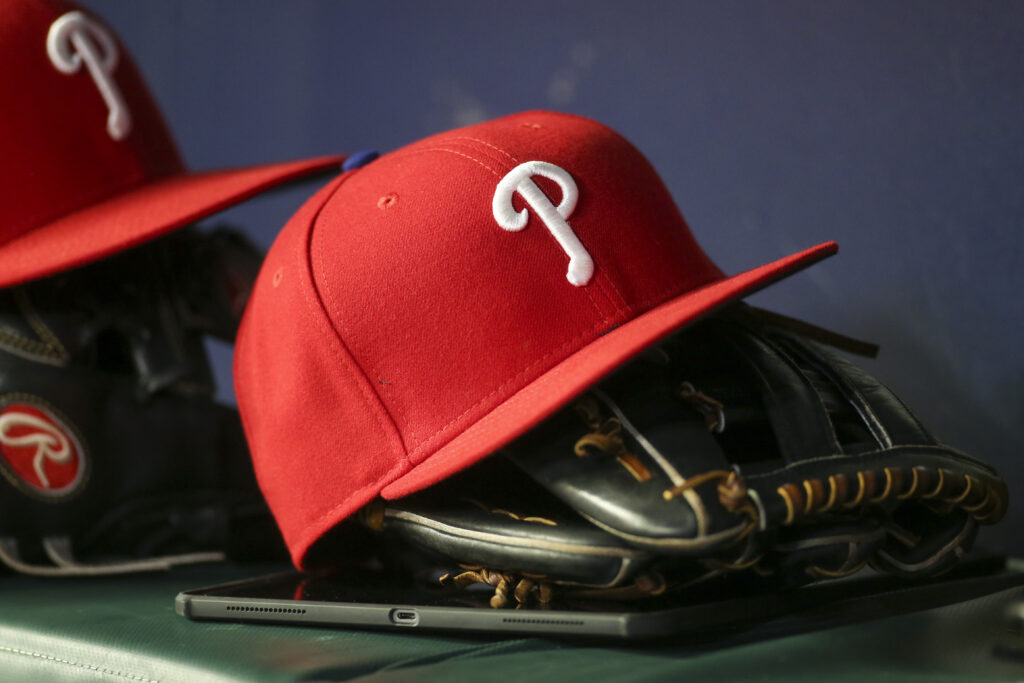
Joe Morgan, who played 26 games at third base for the Philadelphia Phillies in 1960, died Saturday. He was 95.
The news came from the Boston Red Sox, the organization where Morgan later made his name as a manager. For Phillies fans of a certain vintage, he was one more name from the Connie Mack Stadium years — a left-handed-hitting utility man who arrived midseason and was gone before Labor Day.
Morgan reached Philadelphia on June 23, 1960, when the Milwaukee Braves traded him to the Phillies for veteran shortstop Alvin Dark. He was 29, a Boston College product who had already bounced from the Braves to the Kansas City Athletics.
In red pinstripes, he wore No. 1 and started 21 games at third. Over 83 at-bat,s he hit .133 with two doubles, two triples, two RBI and a .396 OPS. The glove was steadier than the bat: he fielded .971 in 190 innings.
On Aug. 9, the Phillies sold him to the Cleveland Indians. That was the end of his Philadelphia chapter.
The 1960 Phillies finished 59-95 and last in the National League. Morgan’s numbers were typical of a club that cycled through infielders. He was never going to be a star here.
He was a professional who filled a hole for two months and moved on, the kind of player every last-place roster needs.
That short stop was one chapter in a long baseball life. Morgan appeared in 88 big-league games total across five teams from 1959 to 1964, batting .193 with two career homers.
He spent far more time in the minors and as a coach and manager. In 1988 he took over a struggling Red Sox club at the All-Star break and engineered the famous “Morgan Magic” run that carried Boston to the AL East title. He managed the Sox through 1991 and later entered their Hall of Fame.
Phillies history is full of players who passed through for a handful of games and then became famous elsewhere. Morgan belongs on that list.
He did not leave a statistical mark in Philadelphia, but he wore the uniform, played third at Connie Mack, and was part of a franchise that was still finding its way after the Whiz Kids era. That is enough to remember him from a Phillies angle.
Morgan is survived by four children, six grandchildren and five great-grandchildren. The baseball world lost a lifer who spent more than four decades in the game after a brief, workmanlike summer in Philadelphia.