
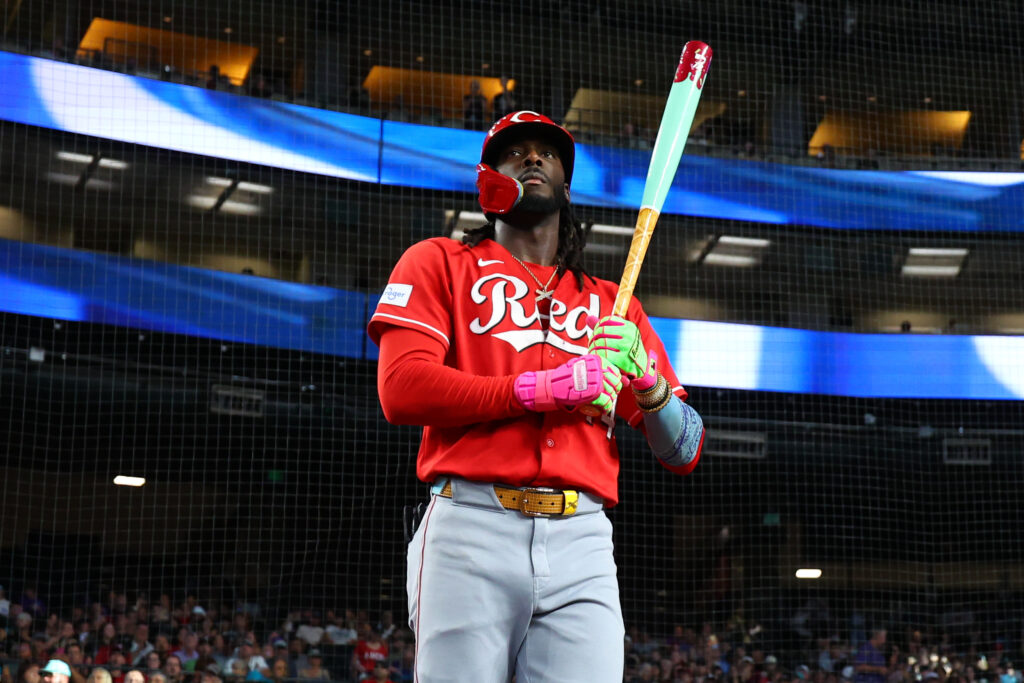
The Cincinnati Reds closed out a forgettable 2026 campaign with little to show for it beyond the continued rise of Elly De La Cruz.
The 24-year-old shortstop delivered a career-best season, batting .283 with 30 home runs, 30 doubles, 30 stolen bases and an .880 OPS while posting roughly 6.4 WAR.
His combination of power, speed and athleticism has made him one of the most dynamic young position players in baseball, yet the club around him fell well short of expectations and finished outside the postseason race.
Chris Landers of FanSided sees a realistic scenario in which Cincinnati at least listens to offers on its franchise player this winter.
The Reds’ lineup still has clear holes, ownership has shown little willingness to open the checkbook, and earlier extension discussions appear to have stalled after De La Cruz turned down a deal that would have surpassed Joey Votto’s previous club-record contract.
In that environment, trading the shortstop for a transformative package of young talent is not an outlandish idea on paper.
At the same time, Landers notes that the Reds hold the leverage: De La Cruz remains under team control for three more seasons before free agency. Without an extraordinary return, Cincinnati can simply keep him and reassess later.
That three-year runway is the central reason any deal remains unlikely. De La Cruz is entering his first arbitration year and will not reach the open market until after the 2029 season.
Small-market clubs rarely surrender that kind of cost-controlled production unless the incoming talent is overwhelming.
Reports have already linked him to clubs such as the Dodgers and Red Sox, and former executives have suggested the Reds would at least field calls.
Still, the asking price would have to resemble the historic packages that have moved other pre-free-agency stars, not a conventional collection of mid-tier prospects.
For now, the most probable outcome is that De La Cruz opens 2027 in a Reds uniform.
Cincinnati’s front office can continue shopping for complementary pieces while waiting to see whether a true blockbuster emerges.
If no such offer appears, the club retains one of the sport’s most exciting players at a fraction of the price he would command on the open market.
Only a return that fundamentally resets the organization is likely to change that calculation.