
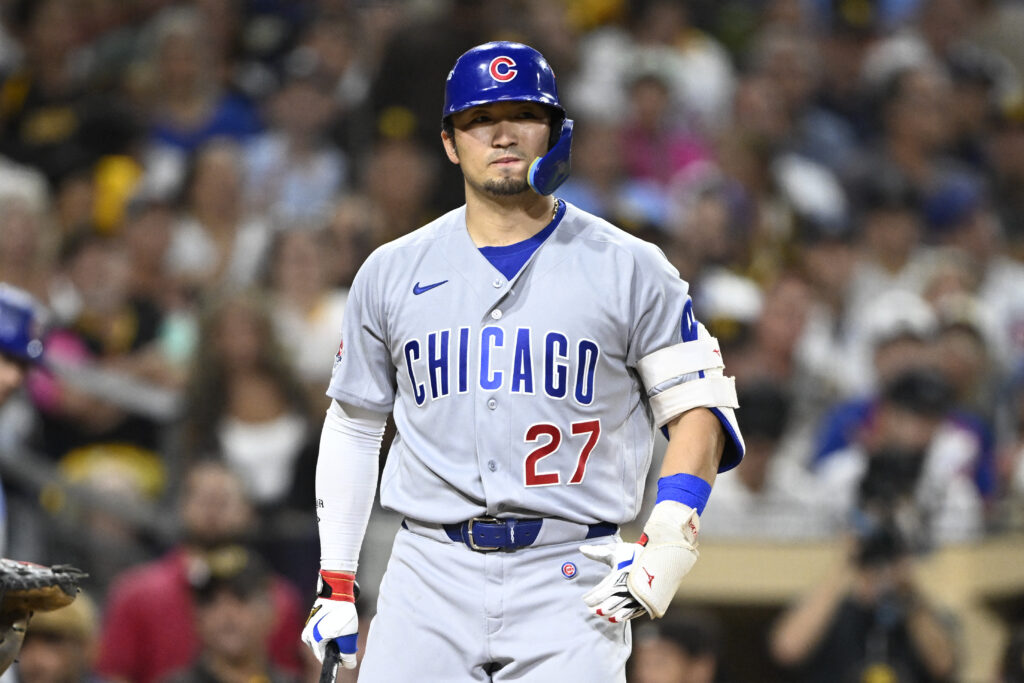
The Chicago Cubs’ season ended the way too many recent ones have, with an early playoff exit in San Diego and a roster already looking different for next spring.
For five years, Seiya Suzuki has been one of the few constants in the middle of that order.
He arrived from Hiroshima on a five-year deal before 2022, and he has done what the contract asked of him: a reliable right-handed bat, enough power to punish mistakes, and enough plate discipline to stay relevant even when the ball was not leaving the yard.
Over that span, he has averaged 22 home runs, 73 runs batted in, and an .823 OPS. In 2026 he finished around .270 with 26 homers, 86 RBI, and an OPS in the low .840s, while his defense in right field graded out as the best of his major-league career.
That is a complete player, not a one-tool slugger. It is also a player who is now 32 and about to hit the open market.
Zachary Rotman of FanSided has already framed the decision the front office is likely to face.
Suzuki lived up to the deal he signed, Rotman wrote, and the Cubs should have an interest in bringing him back, but age and the shape of this winter’s market work against a reunion.
He is one of the better position players in a thin free-agent class, which usually means a contract longer and richer than a cautious club wants to write. Chicago is also unlikely to keep both Suzuki and Ian Happ.
Suzuki is the better player. Happ figures to come cheaper, and cheaper still plays well with ownership. That is the argument, and it is a hard one to dismiss if the budget is treated as fixed.
What gets lost in that framing is how unusual Suzuki’s profile still is. Right-handed bats who get on base, hit the ball in the air, and can now cover ground in an outfield corner are not easy to replace with a bargain.
A qualifying offer would at least force the market to pay a draft-pick cost, and Toronto has already been linked to him as a club in need of power. If the Cubs walk, they are not merely declining an extension.
They are betting that the savings from Happ, or from some younger corner option, will outweigh the production they have had in the middle of the order since Suzuki’s first spring in Mesa.
The Wild Card loss makes the choice feel urgent, but urgency is a poor negotiator. Suzuki’s value is real, his age is real, and the weak class around him will inflate the asking price.
Chicago can decide he is worth that price, or it can decide the next chapter of the lineup does not include him. Pretending both can be true is how a franchise ends up explaining another quiet winter.