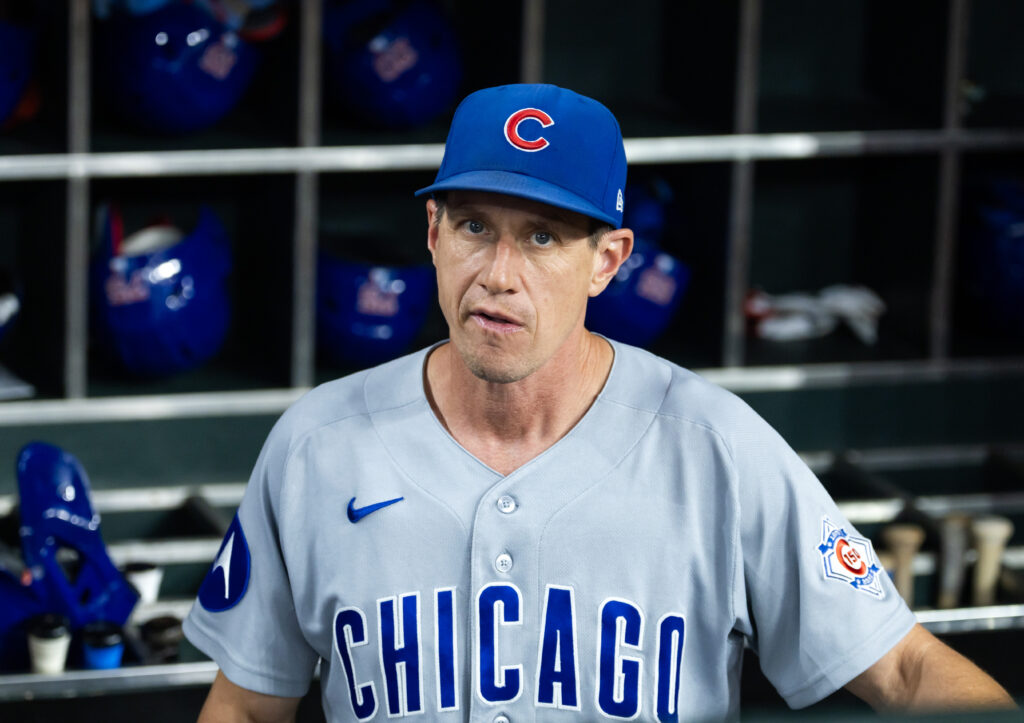
Matthew Boyd is officially a free agent after declining his end of a $15 million mutual option with the Chicago Cubs.
The left-hander will instead take a $2 million buyout and enter the open market, where he can begin speaking with other clubs early next week while still having a short window to discuss a return to Chicago.
Boyd turns 36 in February, and his path to this point has been defined by durability questions. Injuries limited him to just 202 2/3 innings across 2021 through 2024, the most significant of which was Tommy John surgery.
He returned healthy late in 2024, which was enough for the Cubs to offer a two-year, $29 million deal in hopes he could settle in as a mid-rotation starter.
Over the life of that contract he largely justified the investment, making 53 starts and logging 306 1/3 innings with a 3.50 ERA, a 20.2 percent strikeout rate and a 6.5 percent walk rate.
The 2026 season interrupted that momentum. Boyd missed significant time after undergoing arthroscopic surgery to address a partial meniscus tear in his knee.
Once he returned, the surface results were solid: 126 2/3 innings, a 3.91 ERA, a 7.5 percent walk rate and a 42.2 percent ground-ball rate. The underlying indicators were less encouraging.
His strikeout rate fell to 18.5 percent for the full season and dipped as low as 15.5 percent after he came back from the injury.
He generated a few more swings and misses in the final month, yet remained well below average in missing bats overall.
Teams evaluating him will have to weigh whether the drop-off was simply a lingering effect of the knee procedure or a more persistent issue with inducing weak contact.
Even with those concerns, Boyd profiles as a useful innings-eating option for clubs looking to stabilize the back half of a rotation.
A one-year contract is the most realistic outcome; multi-year guarantees for pitchers heading into their age-36 season are uncommon and usually reserved for higher-end performers coming off stronger platform years.
A second guaranteed season is not impossible if multiple teams value his recent track record of run prevention, but the market is more likely to land on a one-year deal that allows him to re-establish his health and swing-and-miss rates.
For the Cubs, his departure adds to an already thin rotation picture heading into the offseason.