
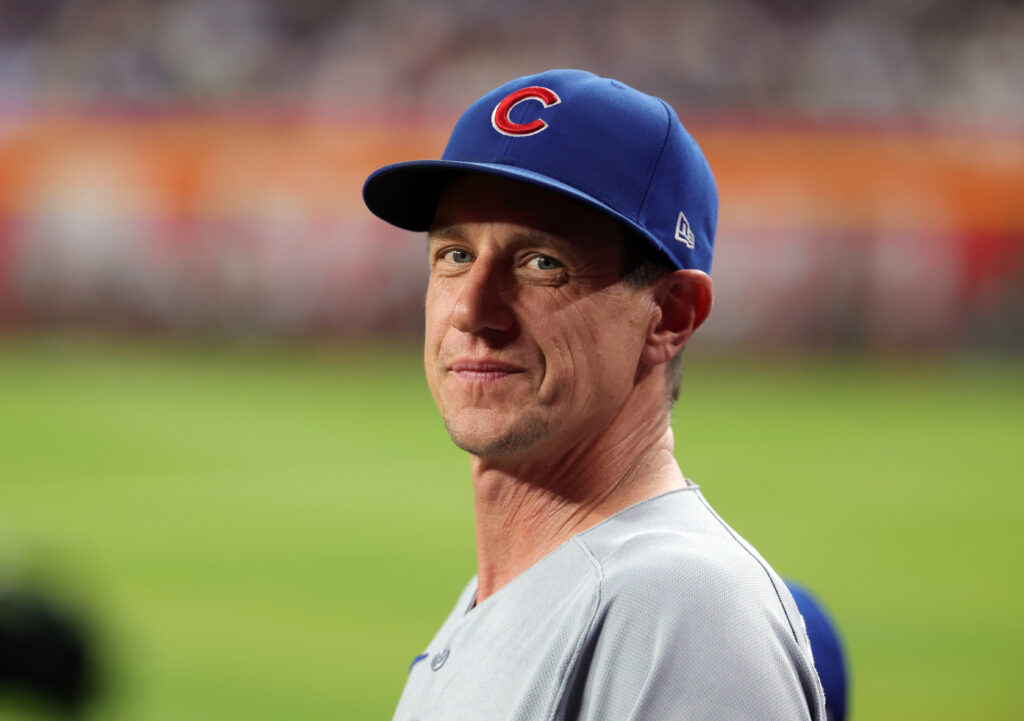
The Chicago Cubs enter the offseason with a clear priority: strengthening a starting rotation that left them short of sustained contention.
After a season that fell short of expectations, the front office is expected to pursue at least one high-impact arm capable of anchoring the staff.
That search has already drawn attention toward Boston Red Sox right-hander Sonny Gray, whose name surfaces as a logical free-agent fit if he elects to test the market.
Gray just completed one of the strongest years of his career. In 29 starts he posted an 18-5 record with a 2.72 ERA and 149 strikeouts, earning his third All-Star selection.
Those numbers arrived in his age-36 season and underscore the durability and effectiveness that have defined much of his 14-year major-league run.
Across 368 career appearances, he owns a 143-107 record, a 3.51 ERA, and 2,074 strikeouts—credentials that keep him relevant even as he approaches his age-37 campaign in 2027.
The connection to Chicago is not merely speculative.
In a recent piece for Fastball on SI, Justin Binkowski listed the Cubs among the more plausible destinations should Gray reach free agency.
He noted Gray’s prior experience pitching in the National League Central with both the Cincinnati Reds and St. Louis Cardinals, suggesting a return to the division could appeal to the veteran.
For a Cubs club looking to add an established starter rather than rely solely on internal options or lower-cost additions, Gray’s track record offers an immediate upgrade at the front of the rotation.
Signing him would not be without risk. At 37 he is no longer a long-term cornerstone, and any multi-year commitment would need to be structured carefully.
Yet the Cubs’ recent track record shows a willingness to add proven veterans when the rotation requires a stabilizing presence. Gray’s ability to miss bats and limit damage at Fenway Park and on the road this past season suggests he could still deliver quality innings in a ballpark and division he already knows. That combination of recent performance and familiarity is what places him on Chicago’s radar.
Whether the Cubs ultimately pursue Gray aggressively will depend on how the rest of the free-agent market develops and on his own willingness to leave Boston.
For now, the linkage simply reflects the club’s stated need for rotation help and Gray’s status as one of the more accomplished arms expected to be available.
If the Cubs intend to take a meaningful step toward contending in 2027, adding a pitcher with Gray’s résumé would represent a concrete step in that direction.