
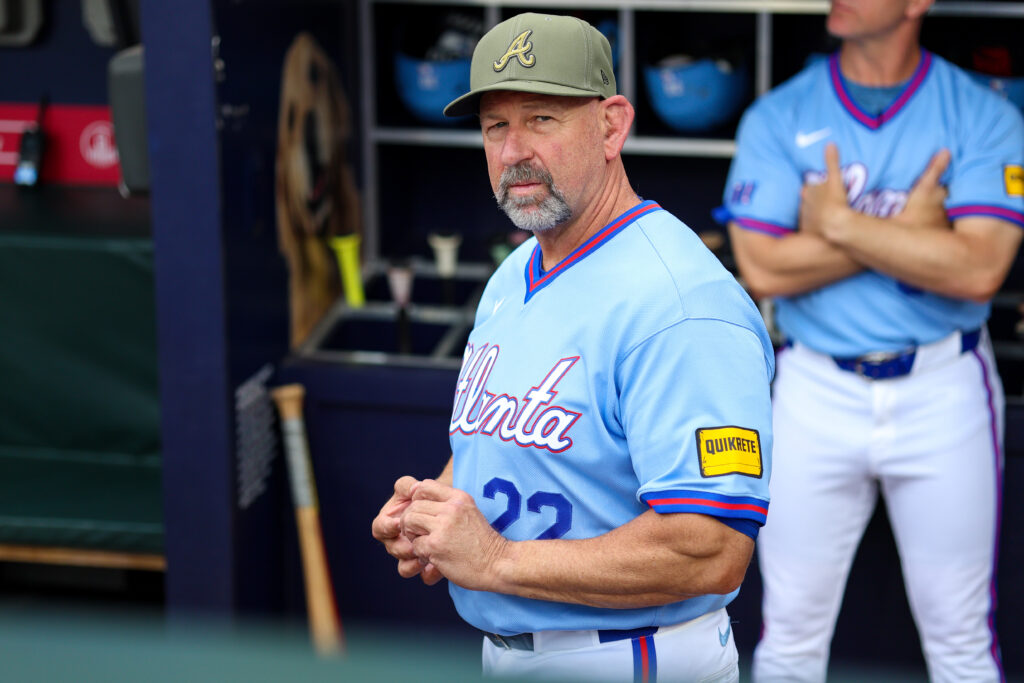
The Atlanta Braves are one of the best teams in baseball this season and comprise one of the biggest threats to the Los Angeles Dodgers, but they could absolutely use some help before the MLB trade deadline.
One area in which the Braves could certainly use an upgrade is at shortstop, where they have gotten very limited production throughout the 2026 campaign.
And who could Atlanta potentially target between now and Aug. 3? Washington Nationals star CJ Abrams, whose name has been floated in incessant trade speculation since last offseason.
Abrams, still only 25 and under club control for two more seasons beyond 2026, is in the midst of a fantastic year. He is slashing .297/.367/.573 with 27 home runs and a league-leading 82 RBI, and while his defense is subpar, his outstanding bat and his tremendous speed (he also has 17 stolen bases) have certainly compensated for it.
For a Nationals team that already features exciting young talent like James Wood, Abrams remains a centerpiece. Trading him within the National League East would require a substantial return, particularly given the divisional implications … but Atlanta might be willing.
Christopher Kline of FanSided feels the Braves represent a logical and aggressive suitor for the All-Star, noting how much of an issue shortstop has been for the club in 2026. Abrams would immediately upgrade a lineup already built to contend with the Dodgers when healthy.
The Braves’ core—anchored by Ronald Acuña Jr., Michael Harris, and other rising talents—could pair with Abrams for multiple postseason runs. While Abrams’ defensive limitations are real and some regression remains possible, his current form and remaining years of control make him an investment aimed squarely at October baseball rather than mere roster depth.
Kline outlines a package that could satisfy Washington’s elevated asking price. The centerpiece would be 23-year-old right-hander JR Ritchie, who has struggled in limited major-league exposure with a 4.50 ERA but possesses a high-ceiling arsenal featuring a sharp curveball and effective sinker. Command remains the primary hurdle, yet Ritchie offers the kind of upside that could quickly stabilize a Nationals rotation desperate for younger, higher-upside arms.
Accompanying Ritchie would be 20-year-old shortstop prospect John Gil, whose elite speed and defensive range position him as a longer-term successor at the position Abrams currently occupies.
Rounding out the deal are two lower-profile but potentially impactful arms: 22-year-old left-hander Herick Hernandez, who has dominated Double-A and is refining his approach at Triple-A, and 26-year-old right-hander Rolddy Muñoz, an electric minor-league reliever who has yet to crack Atlanta’s deep bullpen.
For a Nationals club short on high-leverage pitching, Muñoz could quickly assume late-inning roles.
From Atlanta’s perspective, the cost in prospect capital is significant but manageable given the organization’s pitching depth. Abrams would solve the shortstop problem at a moment when the Braves need every edge to climb the standings and prepare for October.
For Washington, the return converts one elite but expensive shortstop into a pair of young starters with upside, a future shortstop, and bullpen help—precisely the kind of restocking that aligns with the Early acquisition.
Whether the two clubs can bridge the gap before the deadline remains to be seen, but Kline’s proposed framework illustrates how a mutually beneficial deal could take shape if Atlanta is willing to meet the Nationals’ new price.