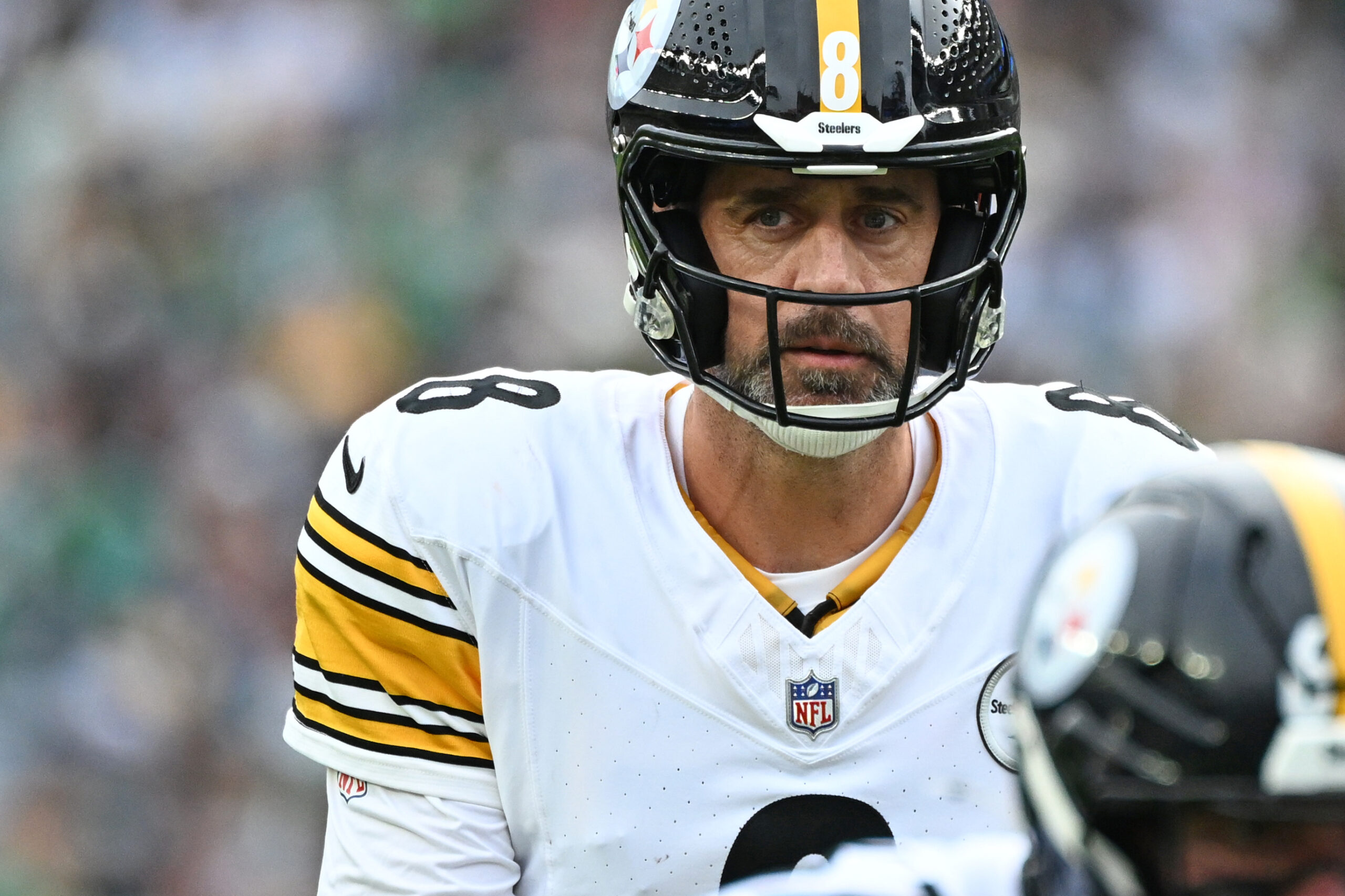
Aaron Rodgers’ time with the Pittsburgh Steelers ended in spectacular fashion, and league sources now say the four-time MVP has no clear path forward in the NFL, via Adam Schefter and Ian Rapoport of ESPN.
Heading into Sunday of Week 12, the former Steelers quarterback lacks obvious landing spots.
Teams that might once have considered him are committed elsewhere: the Ravens are staying with Jacoby Brissett, the Patriots are going with Tommy DeVito, and the Vikings recently acquired Kirk Cousins.
Barring a sudden injury on a contender, interest remains nonexistent. At 43, Rodgers has also given no signal that he intends to keep playing.
The rupture came after weeks of friction inside the Steelers’ building. Rodgers pressed for greater control over the offense, specifically wanting quarterbacks coach Tom Arth to call plays rather than assuming the duty himself.
When coach Mike McCarthy declined to meet his terms, Rodgers warned that he would publicly expose internal problems if things did not go his way.
McCarthy’s reply, according to sources, was blunt: go ahead. Rodgers then appeared on The Pat McAfee Show and criticized the organization, including claims that McCarthy had fallen asleep during meetings.
Those close to the situation say the public outburst surprised no one who had watched the dynamic develop. Rodgers had grown increasingly insistent in his demands, and the tension was discussed among both coaches and players.
McCarthy ultimately decided the arrangement had become untenable. The Steelers released Rodgers rather than risk a prolonged dispute over the remainder of his contract; he will receive his full $22.5 million for the season.
League sources indicate the club would not have allowed him to travel for the Black Friday game against Denver even if he had still been on the roster.
Rodgers viewed his role, at least in part, as that of team spokesman after missed meetings and other internal friction. Several Steelers players have described him as a brother who contributed over two seasons, even as they moved on.
After the release, Pittsburgh’s defense led a decisive win over the Broncos, running the ball 31 times—an approach that had been a point of disagreement when Rodgers was involved.
Coaches around the league have privately noted that long hours can take a physical toll, though they stop short of endorsing the public manner in which the grievances were aired.
For now, Rodgers’ final public act in Pittsburgh may prove to be the nationally televised exit that closed the door on further opportunities.
Whether that marks the end of a decorated career or merely a pause remains unclear, but the market has offered little encouragement.