Nebraska ended a decade-long drought against ranked opponents with a 31-28 upset of No. 16 Ohio State on Saturday at Memorial Stadium, then watched its fans pour onto the field in celebration.
The victory improved the Cornhuskers to 7-4 overall and 4-4 in the Big Ten. Ohio State fell to 7-4 and 5-3, eliminating the Buckeyes from College Football Playoff contention in a season that began with them ranked No. 1 in the preseason Associated Press poll.
Nebraska had lost 31 straight games to teams ranked in the AP Top 25. Its previous such win came on Sept. 17, 2016, a 35-32 victory over No. 22 Oregon. The streak covered more than 10 years of lean results for a program that once ranked among the national powers.
Quarterback Anthony Colandrea completed 19 of 28 passes for 200 yards and multiple touchdowns while adding 63 rushing yards and a score on 11 carries. Nebraska outgained Ohio State 376-335 in total yards, including a decisive 176-76 edge on the ground. The Cornhuskers converted 10 of 16 third downs and controlled the ball for 35:05 compared with Ohio State’s 24:55.
Both teams were flagged seven times. Ohio State’s penalties cost 55 yards. Attendance reached 85,699 for Nebraska’s 417th consecutive sellout at Memorial Stadium.
Ohio State entered the day ranked No. 14 in the College Football Playoff rankings. A win would have kept its narrow playoff path alive heading into the regular-season finale against Michigan. Instead, the loss closed that door.
The postgame scene quickly shifted attention from the scoreboard to the field. Fans rushed the playing surface after the final whistle, one of three such incidents in Big Ten games that day. Washington’s fans did the same after a 27-24 overtime win over Indiana, and Michigan’s crowd stormed the field following an 18-16 triple-overtime victory over UCLA.
The Big Ten does not maintain the automatic escalating fine structure used by other major conferences. The Southeastern Conference now imposes a flat $500,000 fine for any field or court storming. The Atlantic Coast Conference uses a graduated scale starting at $50,000 for a first offense.
The Big Ten instead relies on a game-management policy that requires host schools to provide adequate security for visiting teams from their arrival through their departure. A 2024 review of conference practices noted that a discretionary fine can result on a third offense for failure to meet that standard. Earlier offenses typically draw only private or public reprimands.
USA Today reported earlier this season, after Michigan fans stormed the field following a narrow win over Western Michigan, that “it remains unclear whether Michigan will receive any kind of punishment, financial or otherwise, from the Big Ten.” The same uncertainty applies to Nebraska. The Cornhuskers have not produced many recent wins that prompted large field invasions, so the “third offense” threshold is unlikely to be an immediate factor.
Conference officials could still review all three Saturday incidents together and decide on a consistent response, or they could take no formal action. Past cases, including Minnesota’s 2024 field storming after an upset of USC, produced only statements emphasizing safety rather than fines.
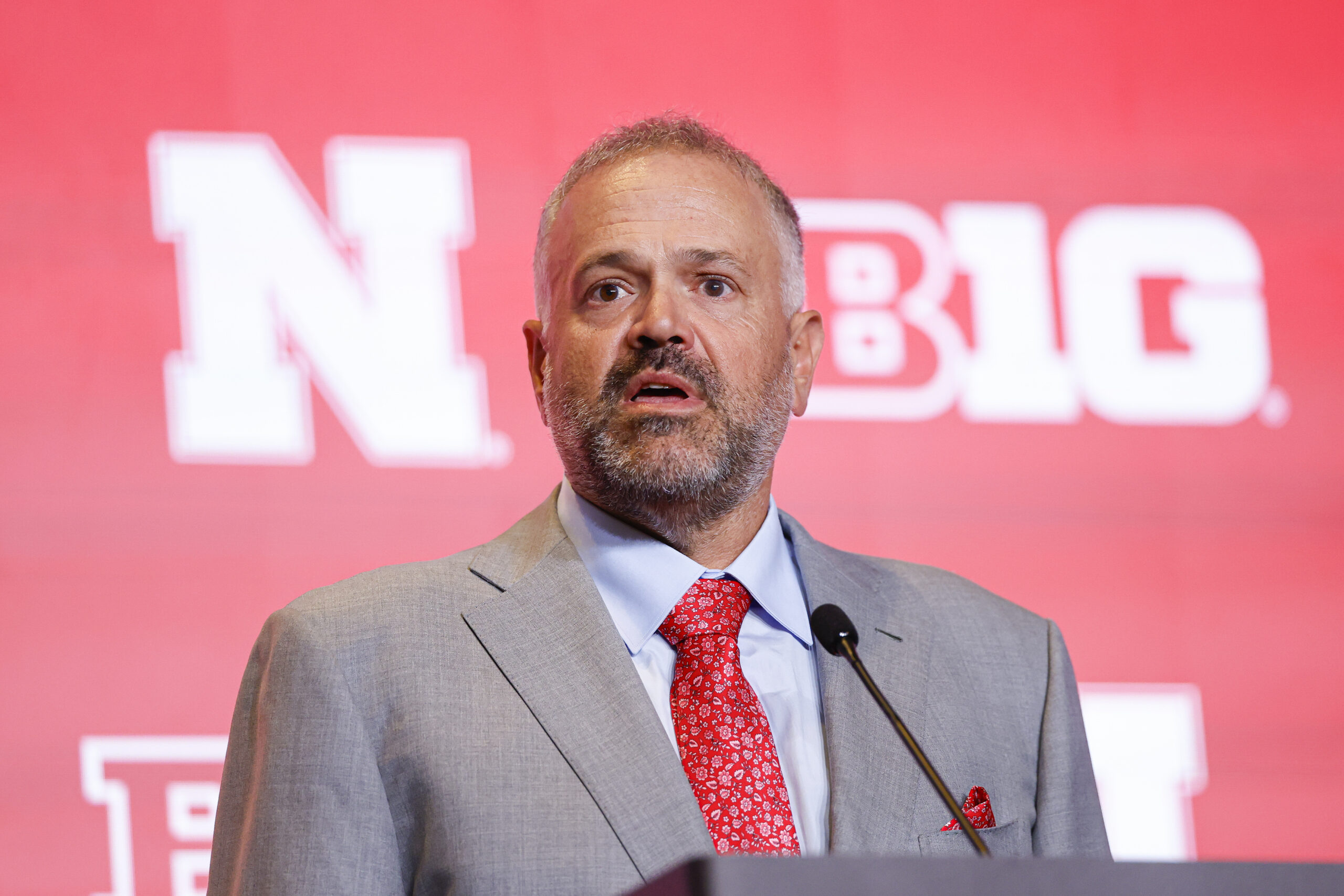
Nebraska’s win snapped a streak that had defined much of the Matt Rhule era. The coach had been at the helm for the majority of those 31 losses to ranked teams. The result also ended Ohio State’s hopes of reaching the Big Ten championship game.
For now, the immediate questions center on whether the conference will treat the field storming as a security violation worth a fine or simply note it as part of an emotional afternoon in Lincoln. No decision has been announced.