The Las Vegas Raiders entered Week 10 already searching for offensive identity, then watched their clearest mismatch disappear.
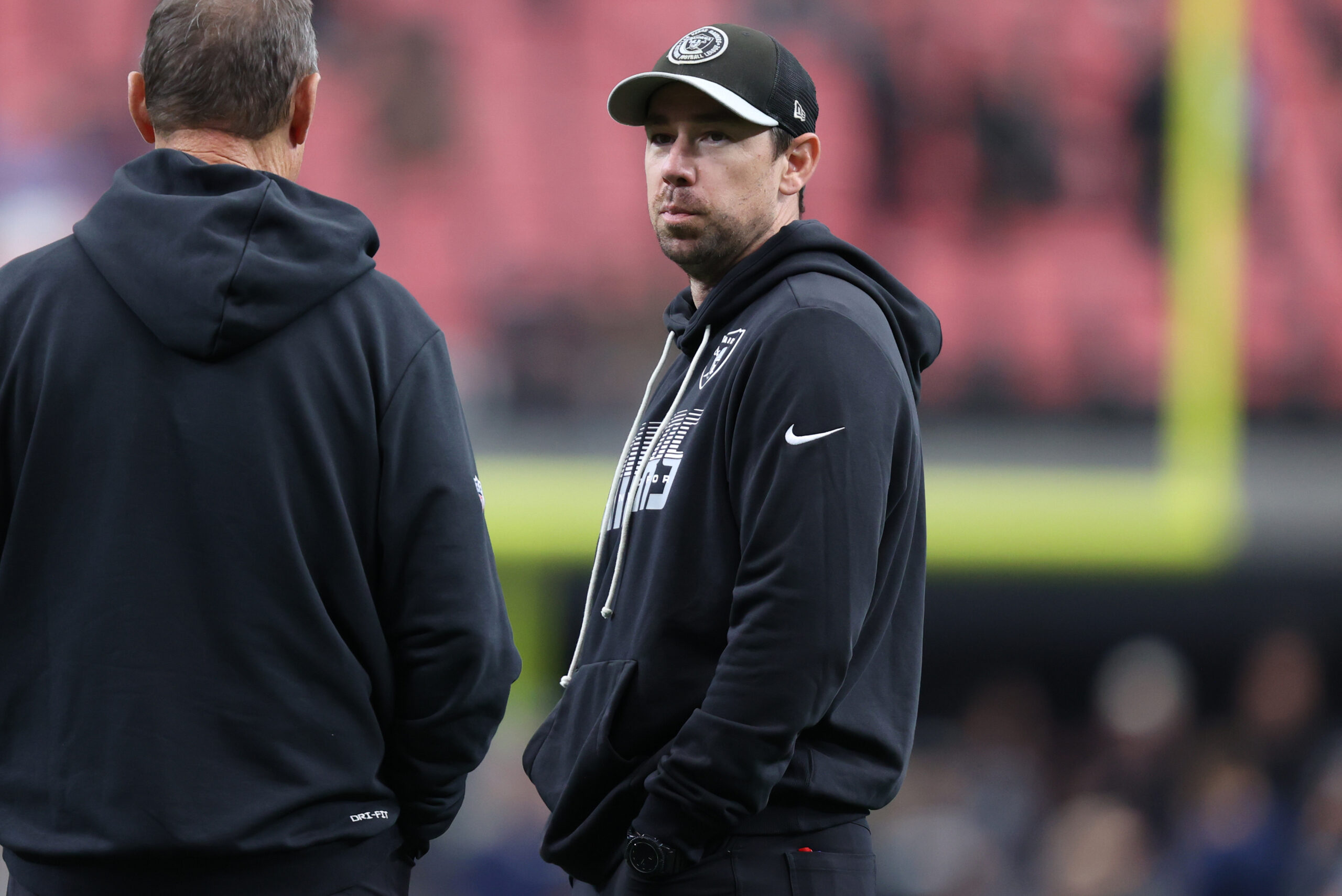
Brock Bowers left the 21-13 loss to Seattle with an ankle injury that coach Klint Kubiak later called day-to-day but still significant.
In his absence, the passing game produced little beyond Ashton Jeanty’s four catches for 46 yards, and rookie quarterback Fernando Mendoza absorbed six sacks while completing just 17 of 29 passes for 143 yards.
Former Raider Kirk Morrison put it plainly: Bowers is the spoon that stirs the drink, the one true mismatch that forces defenses to declare their intentions. Without him, the unit becomes far easier to defend.
That vacuum is precisely why the name Brandon Aiyuk surfaced again.
49ers reporter Grant Cohn listed the Raiders among the teams that would benefit most once San Francisco finally severs ties with its former second-team All-Pro.
Aiyuk has not played since October 20, 2024, when he tore the ACL, MCL, and meniscus in his right knee against the Chiefs. What followed was a long, contentious rehabilitation, a placement on the reserve/left-squad list, public friction with the organization, and a recent reinstatement that carries a two-week roster exemption.
Most expect the 49ers to release him rather than restore him to the active roster. At 28 and nearly two years removed from live game action, he arrives as a free-agent proposition rather than a finished product.
For Las Vegas, the appeal is straightforward. The offense lacks a proven vertical threat or a consistent intermediate separator outside of Bowers.
Even a partially recovered Aiyuk, who once thrived creating separation with suddenness and contested-catch ability (he finished with 1,342 yards in 2023), could give Mendoza a different set of answers than the current collection of complementary pieces.
The risk is equally clear: conditioning after such a prolonged absence is uncertain, and Aiyuk’s recent history suggests any new partnership would begin under a cloud of questions about reliability and fit.
A short-term, incentive-laden deal would be the logical structure, giving both sides an exit if the on-field results do not appear.
Bowers’ availability remains the more immediate variable. If he returns quickly, the urgency lessens.
If the ankle lingers, the Raiders’ passing attack will continue to operate without its primary gravitational force. In that scenario, a healthy-enough Aiyuk becomes one of the few external options capable of changing the math.
Whether Las Vegas chooses to pursue him is another matter. The suggestion, however, underscores a simple reality: the team’s current weapons are not enough to carry an offense once its best one is sidelined.
Aiyuk’s potential arrival would not solve every problem, but it would force defenses to account for a name that still carries residual respect, something the Raiders have lacked for stretches this season.